
Older dogs rarely announce that something has become harder. The routine usually shows it first.
Senior dog care is about noticing slow changes early and adjusting the everyday routine for comfort. Most significant health issues in senior dogs show up first as subtle behavioral or routine changes — reluctance to walk, different sleep patterns, appetite shifts — before anything more obvious.

What to notice as your dog gets older
Senior dogs often adapt quietly to things that have become harder — they stop jumping on the sofa without anyone noticing, start finishing meals more slowly, or choose shorter walking routes. These small disappearances are easier to catch if you know what the dog's normal looked like in writing, not just in memory.
Start logging your senior dog's baseline →
When a dog becomes a senior
The age at which a dog is considered senior varies — large breeds often enter senior years around six or seven, while smaller breeds may not reach that life stage until ten or eleven. Aging is gradual, and the small day-to-day shifts often matter more than a calendar number.
The goal of senior care isn't to slow time. It's to make the everyday feel comfortable and predictable, while keeping a closer eye on the signals that point to an issue worth raising with your vet.
Mobility and comfort
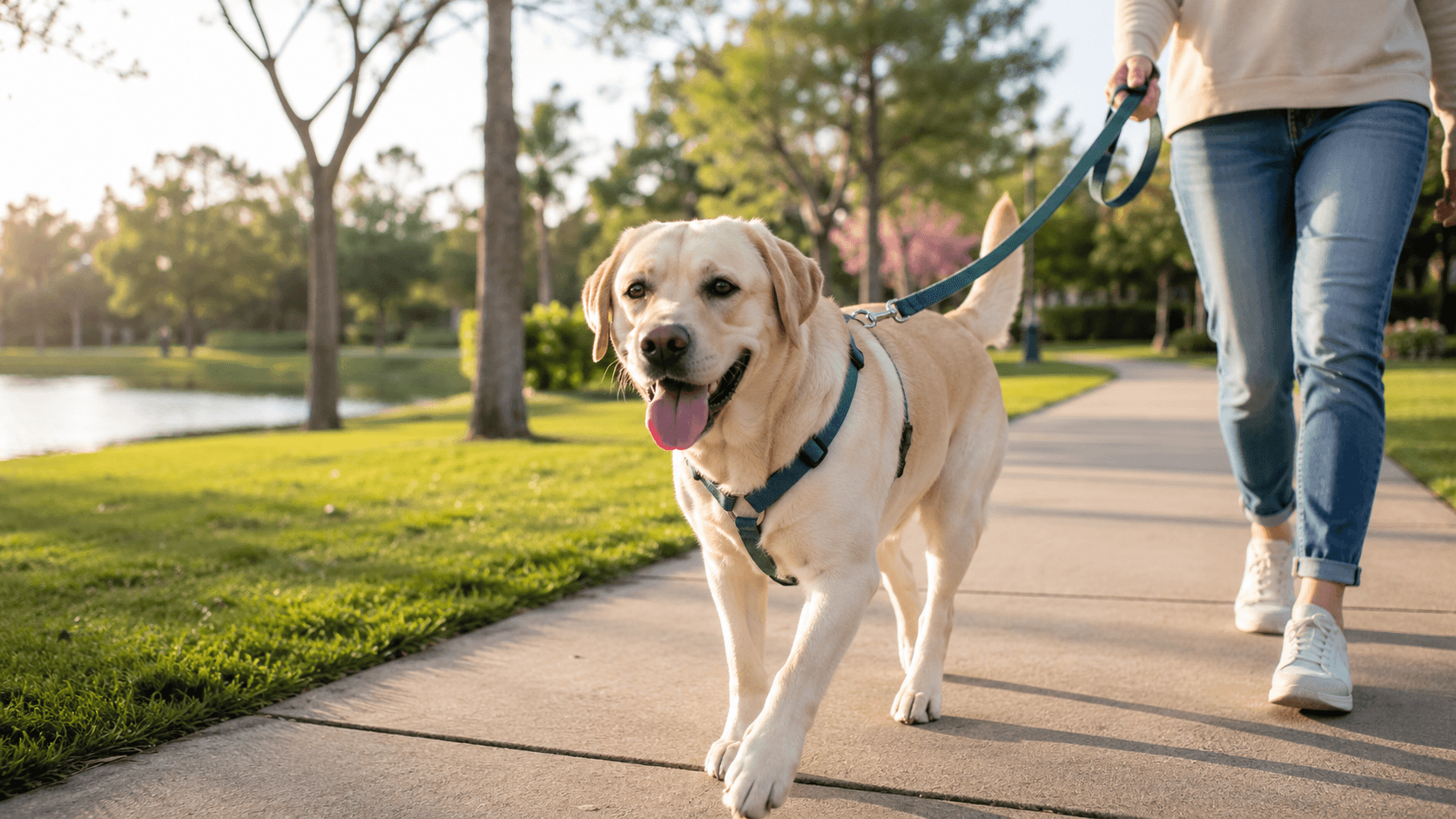
Joints stiffen with age. A few practical adjustments can make a real difference: orthopedic bedding, ramps or steps to favorite resting spots, non-slip mats on slippery floors, and shorter but more frequent walks rather than long outings.
Keep an eye on how your dog gets up, navigates stairs, and settles down. Reluctance to jump, slow rises, or stiffness after rest is worth noting and discussing with your vet.

Health observations to track
Small, consistent observations are more useful than occasional snapshots. Worth keeping a rough log of:
- •Appetite — eating more, less, or with hesitation
- •Water intake — a sudden increase or decrease
- •Weight — gradual gain or loss over weeks
- •Bathroom habits — frequency, accidents, or straining
- •Energy and sleep — more rest, restlessness, or pacing at night
- •Coat and skin — lumps, dullness, or new patches of irritation
Cognitive changes
Some senior dogs develop canine cognitive dysfunction, which shares features with dementia in people. Confusion in familiar spaces, restlessness in the evening, altered sleep patterns, or new vocalization at night can all be early signs. Raise these with your vet so they can assess and discuss what may help.
Vet visit preparation
Senior dogs benefit from more frequent veterinary visits, and those visits go better with notes. Bring a brief summary of changes since the last visit, current medications and supplements, and a short video of any behavior that is hard to describe.
Before each vet visit, bring notes from the last 2–3 months
Vets are much better equipped to assess senior changes when they have a timeline. Weight at the last three visits, any appetite or sleep changes, mobility observations, and medication responses all help. A brief written summary takes minutes to put together and makes the appointment significantly more useful.
Keep a health log in PetMyDear →Keep your pet's health in one place
Log symptoms, track medications, and store vet visit notes so nothing important gets forgotten.